
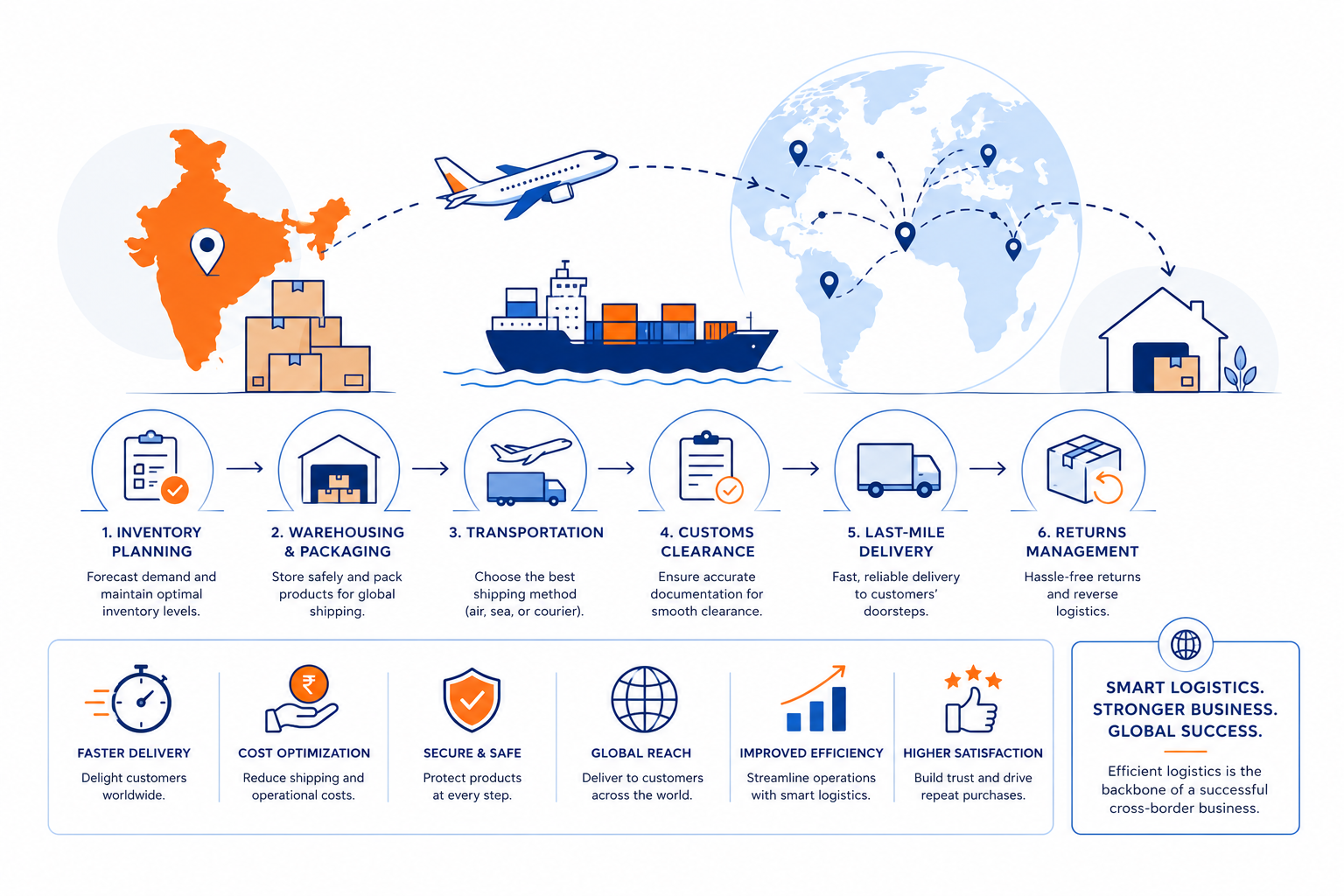
Global Logistics Management. The Backbone of Successful Cross-Border E-commerce
Why Logistics Can Make or Break Your International Business
For Indian D2C brands and MSMEs, securing international orders is only the beginning of the export journey. The real challenge lies in delivering products to customers safely, on time, and at a reasonable cost.
A delayed shipment, damaged package, or unexpected customs issue can negatively impact customer satisfaction and brand reputation. On the other hand, a well-planned logistics strategy helps businesses reduce costs, improve delivery performance, and build long-term customer trust.
As cross-border e-commerce continues to grow, global logistics has become a key competitive advantage for businesses selling internationally.
What Is Global Logistics Management?
Global logistics management is the process of planning, coordinating, and optimizing the movement of goods from one country to another.
It covers every stage of the supply chain, including:
- Inventory planning
- Packaging
- Warehousing
- Transportation
- Customs clearance
- International shipping
- Last-mile delivery
- Returns management
The objective is simple. Deliver the right product to the right customer, at the right time, in the most cost-effective manner.
Why Global Logistics Matters
Efficient logistics directly influences business performance.
It helps businesses:
- Deliver products faster
- Reduce shipping costs
- Improve customer satisfaction
- Minimize damaged shipments
- Simplify customs clearance
- Increase repeat purchases
- Build a reliable global brand
For international customers, the delivery experience is just as important as the product itself.
Key Components of Global Logistics Management
Inventory Planning
Maintaining the right inventory levels prevents stockouts while avoiding unnecessary storage costs.
Demand forecasting helps businesses ensure products are available when customers place orders.
Warehousing
Businesses can choose between storing inventory in India or using overseas fulfillment centers closer to customers.
Strategically located warehouses reduce delivery times and shipping costs.
Packaging
International shipments often travel thousands of miles through multiple transportation hubs.
Proper packaging protects products from:
- Moisture
- Impact
- Temperature variations
- Mishandling
Strong, lightweight, and sustainable packaging also helps reduce shipping expenses.
Transportation
Exporters typically choose between:
- Air Freight
- Sea Freight
- Courier Services
- Multimodal Transportation
The right option depends on:
- Product value
- Shipment size
- Delivery timeline
- Budget
Customs Clearance
Every international shipment must comply with customs regulations in both the exporting and importing countries.
Accurate documentation and product classification help avoid delays and unexpected charges.
Last-Mile Delivery
The final stage of delivery has a significant impact on customer satisfaction.
Reliable last-mile delivery partners ensure orders reach customers quickly and safely.
Logistics Models for Cross-Border E-commerce
Different businesses adopt different logistics models depending on their size and growth stage.
Direct Shipping from India
Products are shipped directly to international customers after each order.
Best suited for:
- New exporters
- Low order volumes
- Customized products
Overseas Warehousing
Inventory is stored in warehouses located near target markets.
Benefits include:
- Faster delivery
- Lower shipping cost per order
- Improved customer experience
Fulfillment by Marketplace
Many global marketplaces offer fulfillment services where inventory is stored in their warehouses.
The marketplace handles:
- Storage
- Packing
- Shipping
- Customer service
- Returns
This model simplifies international operations for many exporters.
Third-Party Logistics (3PL)
Specialized logistics providers manage warehousing, shipping, customs coordination, and order fulfillment on behalf of businesses.
This allows brands to focus on product development and marketing.
Choosing the Right Shipping Method
The ideal shipping solution depends on several factors.
Air Freight
Best for:
- Lightweight products
- High-value goods
- Urgent deliveries
Advantages:
- Fast transit
- Reliable scheduling
Consideration:
- Higher shipping costs
Sea Freight
Best for:
- Bulk shipments
- Heavy products
- Cost-sensitive businesses
Advantages:
- Economical for large volumes
Consideration:
- Longer transit times
International Courier Services
Suitable for:
- Small parcels
- Sample shipments
- Direct-to-consumer orders
Advantages:
- Door-to-door delivery
- Easy tracking
- Faster customs handling
Factors Affecting International Shipping Costs
Shipping costs depend on several variables, including:
- Product weight
- Package dimensions
- Destination country
- Shipping method
- Customs duties
- Fuel surcharges
- Insurance
- Packaging materials
Optimizing package size and consolidating shipments can significantly reduce logistics costs.
Customs and Compliance
Smooth customs clearance requires:
- Correct HS Codes
- Commercial Invoice
- Packing List
- Shipping Bill
- Certificate of Origin (where applicable)
- Compliance certificates for regulated products
Accurate documentation reduces delays and helps avoid unnecessary penalties.
Managing International Returns
Returns are an essential part of e-commerce.
A clear return strategy should include:
- Return policies
- Reverse logistics
- Inspection procedures
- Refund management
- Inventory recovery
An efficient returns process enhances customer confidence and encourages repeat purchases.
Technology in Global Logistics
Modern logistics relies heavily on technology.
Businesses use digital tools for:
- Shipment tracking
- Inventory management
- Warehouse automation
- Demand forecasting
- Route optimization
- Order management
- Customs documentation
- Delivery notifications
Real-time visibility helps businesses make faster and more informed decisions.
Common Logistics Challenges
First-time exporters often face challenges such as:
- High shipping costs
- Customs delays
- Incorrect documentation
- Inventory shortages
- Damaged shipments
- Long delivery times
- Limited tracking visibility
- Managing returns across borders
With proper planning and experienced logistics partners, these challenges can be minimized.
Best Practices for Successful Global Logistics
To build an efficient international supply chain:
- Choose reliable logistics partners.
- Forecast demand accurately.
- Optimize packaging for protection and cost.
- Maintain accurate inventory records.
- Track shipments in real time.
- Keep export documentation organized.
- Understand destination country regulations.
- Regularly review shipping costs and delivery performance.
Continuous improvement in logistics leads to higher customer satisfaction and stronger profitability.
The Future of Global Logistics
Global logistics is evolving rapidly with innovations such as:
- AI-powered demand forecasting
- Automated warehouses
- Smart inventory systems
- Real-time shipment visibility
- Sustainable packaging solutions
- Electric delivery fleets
- Drone and autonomous delivery trials
- Blockchain-enabled supply chain transparency
Businesses that embrace these technologies will gain greater efficiency and remain competitive in international markets.
Final Thoughts
Global logistics management is far more than transporting products from one country to another. It is a strategic function that directly impacts customer experience, operational efficiency, and business growth.
For Indian D2C brands and MSMEs, investing in a reliable logistics strategy is essential to succeeding in cross-border e-commerce. By combining efficient shipping, accurate documentation, technology, and trusted logistics partners, businesses can confidently serve customers across the globe.
As international demand for Indian products continues to rise, companies with strong logistics capabilities will be better positioned to scale and build lasting global brands.
How Niryat.in Can Help
At Niryat.in, we help Indian D2C brands, manufacturers, and MSMEs simplify global logistics and expand into international markets with confidence.
Our services include:
- Global logistics strategy
- International shipping consultation
- Export documentation support
- Customs compliance guidance
- Fulfillment planning
- Amazon FBA logistics support
- Overseas warehouse planning
- Courier and freight partner selection
- Inventory and supply chain optimization
- End-to-end export assistance
Whether you’re shipping your first international order or managing large-scale exports, Niryat.in provides the expertise and guidance needed to build a reliable global supply chain.
From India to the World. We help your products move across borders efficiently, securely, and successfully.