
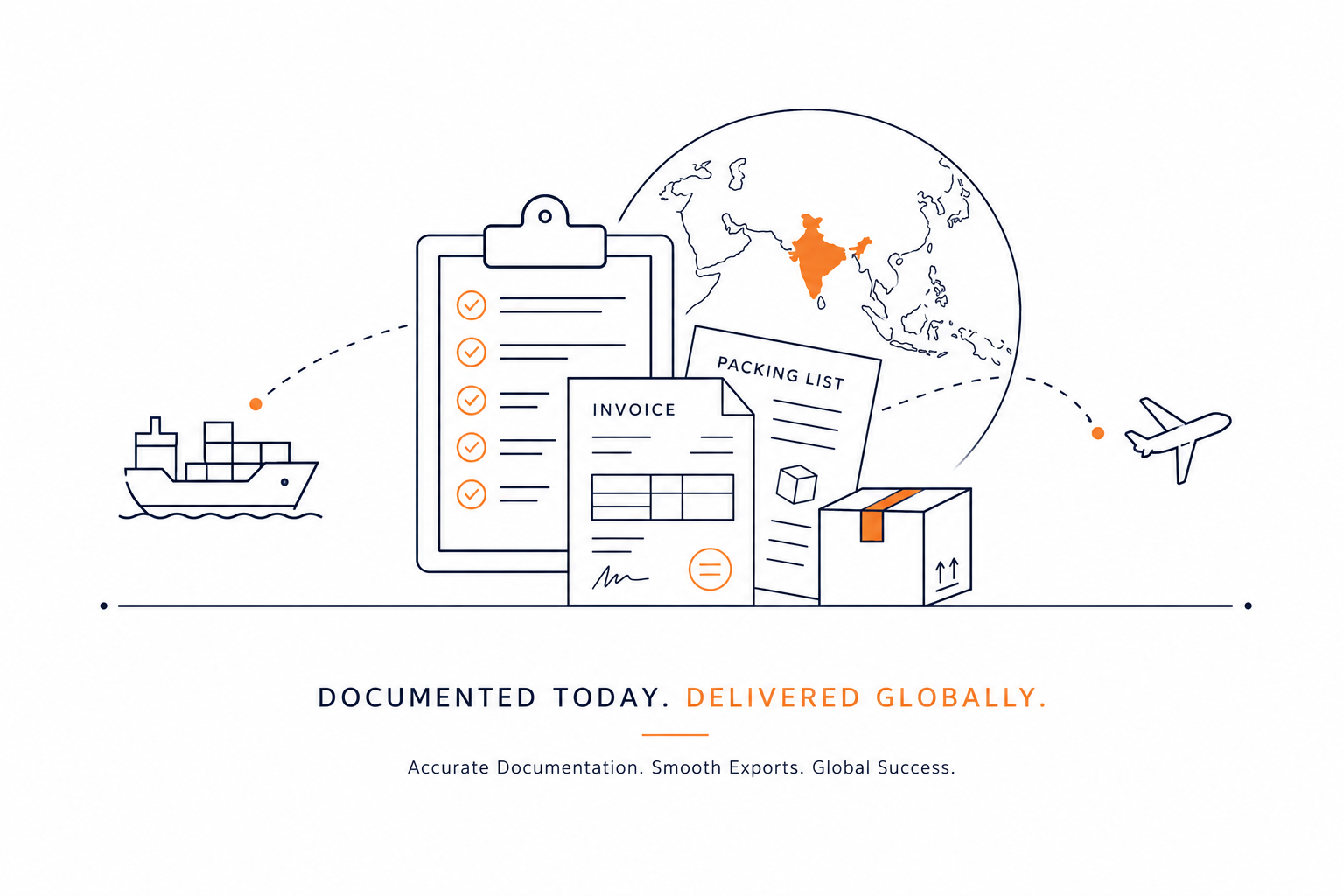
Export & Import Documentation. A Complete Guide for Indian D2C Brands and MSMEs
Why Documentation Is the Foundation of Successful International Trade
For many Indian businesses, the idea of exporting products to international markets is exciting. Global customers, higher profit margins, and access to new markets make cross-border e-commerce an attractive growth opportunity. However, one aspect often intimidates first-time exporters. Documentation.
Many entrepreneurs assume export documentation is complicated and time-consuming. In reality, once you understand the purpose of each document and establish a proper process, international trade becomes much more manageable.
Whether you’re selling through Amazon Global Selling, Shopify, your own website, or traditional B2B channels, accurate documentation ensures your shipments move smoothly through customs, payments are processed without delays, and your business remains compliant with Indian and international regulations.
What Is Export Documentation?
Export documentation refers to the set of legal, commercial, shipping, and customs documents required to move goods from one country to another.
These documents serve multiple purposes:
- Identify the exporter and importer
- Describe the products being shipped
- Determine customs duties and taxes
- Prove ownership of goods
- Facilitate international payments
- Ensure compliance with government regulations
- Enable customs clearance in both countries
Without proper documentation, shipments may be delayed, incur additional costs, or even be rejected by customs authorities.
Why Proper Documentation Matters
Accurate documentation helps businesses:
- Avoid customs delays
- Receive faster international payments
- Reduce shipping errors
- Build credibility with overseas buyers
- Comply with export regulations
- Prevent unnecessary penalties
- Simplify GST refund and export incentive claims
Good documentation is not just about compliance. It also creates trust with customers, logistics providers, and financial institutions.
Essential Export Documents Every Indian Exporter Should Know
1. Import Export Code (IEC)
The Import Export Code (IEC) is issued by the Directorate General of Foreign Trade (DGFT).
It is the primary registration required for businesses that wish to export or import goods from India.
Without an IEC, commercial exports generally cannot proceed.
2. Commercial Invoice
The Commercial Invoice is one of the most important export documents.
It includes:
- Exporter details
- Buyer information
- Product description
- Quantity
- Unit price
- Total value
- Currency
- Country of origin
- Payment terms
Customs authorities use this document to determine duties and taxes.
3. Packing List
A Packing List provides detailed information about the shipment, including:
- Number of cartons
- Weight
- Dimensions
- Packaging details
- Product quantities
- Shipping marks
It helps customs officers and logistics providers verify the shipment.
4. Shipping Bill
The Shipping Bill is filed with Indian Customs before goods leave the country.
It acts as the official customs clearance document for exports.
Without an approved Shipping Bill, export shipments cannot be processed.
5. Bill of Lading or Air Waybill
These are transportation documents issued by the shipping line or airline.
They confirm that the carrier has received the goods for transportation.
Depending on the shipping method:
- Sea shipments use a Bill of Lading (BL)
- Air shipments use an Air Waybill (AWB)
6. Certificate of Origin (COO)
The Certificate of Origin certifies where the products were manufactured.
Many importing countries require this document to determine eligibility for preferential tariffs under trade agreements.
7. Insurance Certificate
When goods are insured during transit, an Insurance Certificate provides proof of coverage against loss or damage.
This protects both exporters and buyers from unforeseen risks.
8. Export Declaration
Depending on the product category and destination country, exporters may need to submit declarations confirming compliance with applicable export regulations.
Common Import Documents
If your business imports raw materials, packaging, or finished goods, you’ll also encounter documents such as:
- Bill of Entry
- Commercial Invoice
- Packing List
- Bill of Lading or Air Waybill
- Insurance Certificate
- Certificate of Origin
- Import License (where applicable)
- Purchase Order
- Letter of Credit (for certain payment arrangements)
Proper import documentation ensures faster customs clearance and minimizes delays.
Documents Required Before You Start Exporting
Before shipping your first order, make sure you have:
- GST Registration
- Import Export Code (IEC)
- PAN Card
- Current Account
- Business Registration
- AD Code registration with Customs
- Digital Signature Certificate (where applicable)
These registrations form the foundation of a compliant export business.
Documentation for Cross-Border E-commerce
Selling through online marketplaces often requires additional information, such as:
- Product listings
- HS Code classification
- Product dimensions
- Country of origin
- Compliance certificates (if applicable)
- Brand authorization (for certain products)
- Product images
- Barcode information
Accurate product data reduces the risk of listing issues and customs queries.
Common Documentation Mistakes to Avoid
Many first-time exporters make avoidable mistakes, including:
- Incorrect product descriptions
- Wrong HS Codes
- Mismatched invoice and packing list quantities
- Incorrect buyer information
- Missing signatures
- Wrong currency declarations
- Incomplete shipping details
Even small errors can result in shipment delays and additional costs.
Tips for Managing Export Documentation Efficiently
As your export business grows, documentation becomes easier with standardized processes.
Best practices include:
- Maintain digital copies of all documents
- Use consistent product descriptions
- Verify buyer details before shipment
- Keep invoice numbering organized
- Review shipping documents before dispatch
- Work with experienced customs brokers and logistics partners
- Regularly update compliance requirements for your target markets
A well-organized documentation system saves time and reduces operational risks.
How Technology Simplifies Export Documentation
Modern exporters increasingly use digital tools to streamline paperwork.
These tools help with:
- Invoice generation
- Shipping documentation
- Customs filing
- Inventory management
- Product classification
- Shipment tracking
- Document storage
- Export compliance
Automation reduces manual errors and improves efficiency.
Why Documentation Is a Competitive Advantage
Businesses that consistently maintain accurate documentation enjoy faster customs clearance, stronger relationships with logistics partners, and greater confidence from international buyers.
Good documentation also prepares businesses for scaling into multiple countries without operational bottlenecks.
Final Thoughts
Export and import documentation is not merely a regulatory requirement. It is the backbone of successful international trade.
By understanding the purpose of each document and implementing standardized processes, Indian D2C brands and MSMEs can confidently expand into global markets while minimizing delays, reducing compliance risks, and improving customer satisfaction.
As global demand for Indian products continues to grow, businesses that invest in strong documentation practices will be better positioned to compete internationally.
How Niryat.in Can Help
At Niryat.in, we simplify the export journey for Indian D2C brands, manufacturers, and MSMEs.
Our experts assist with:
- Export readiness assessment
- IEC and export guidance
- Documentation support
- Product classification (HS Codes)
- Customs compliance
- International marketplace onboarding
- Amazon Global Selling assistance
- Shipping and logistics consultation
- End-to-end export strategy
Whether you’re exporting your first shipment or scaling your international operations, Niryat.in helps you navigate export documentation with confidence.
From India to the World. We simplify exports so you can focus on growing your business.